
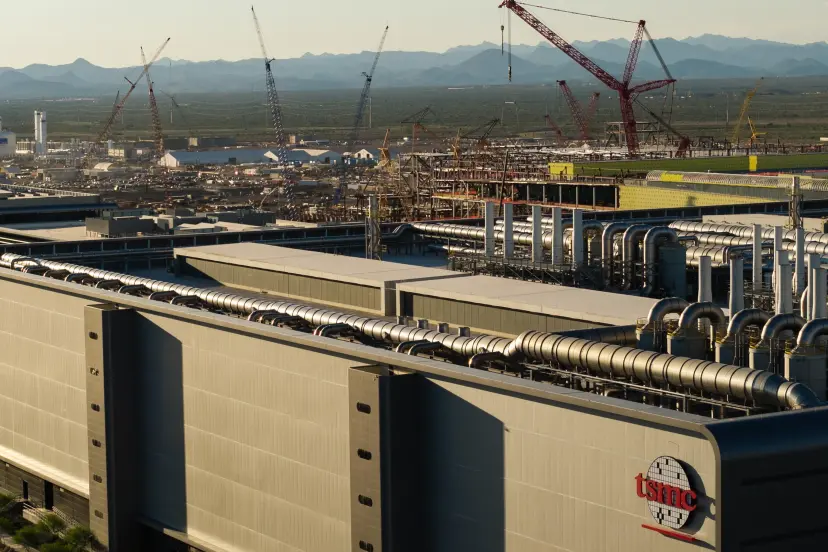
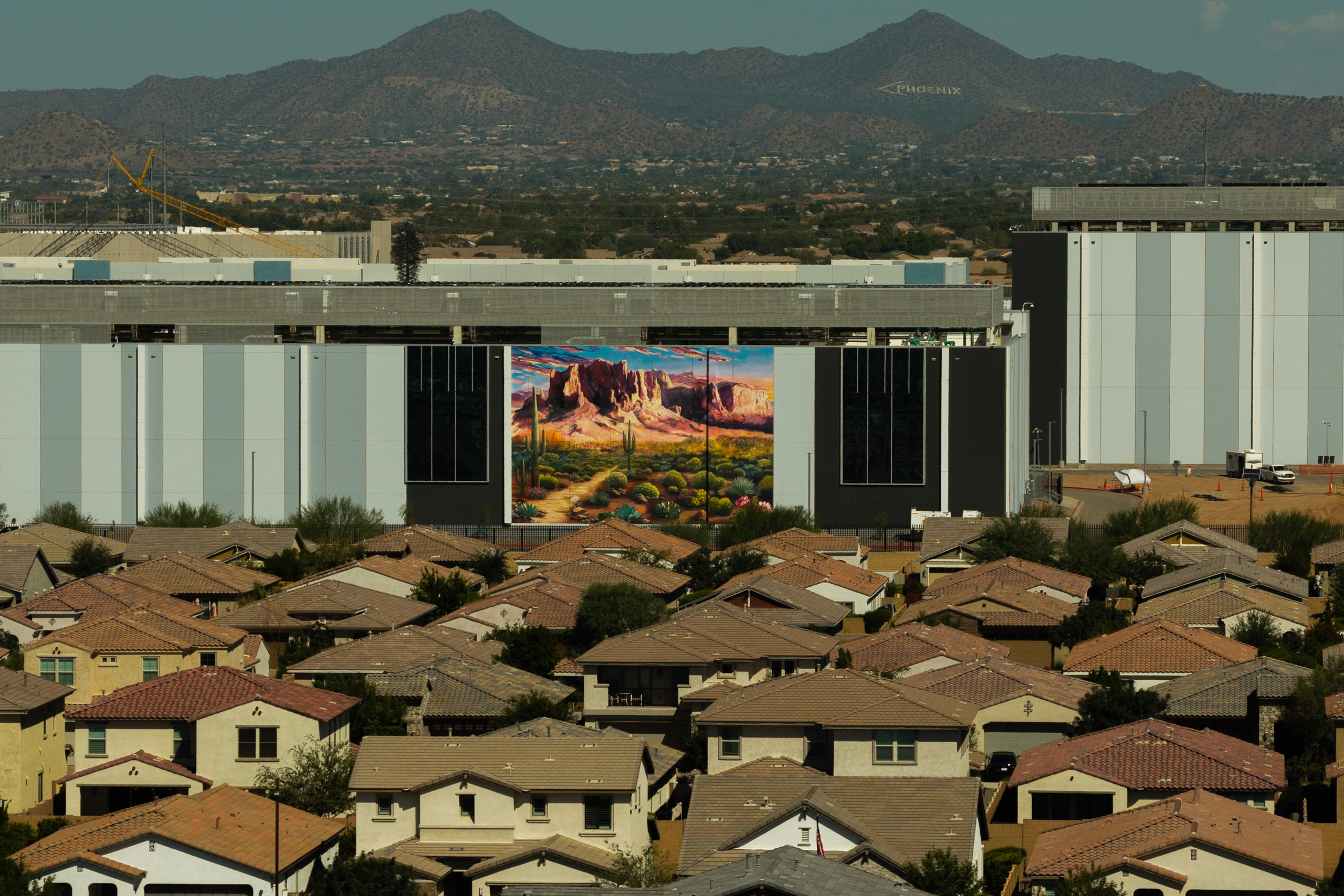


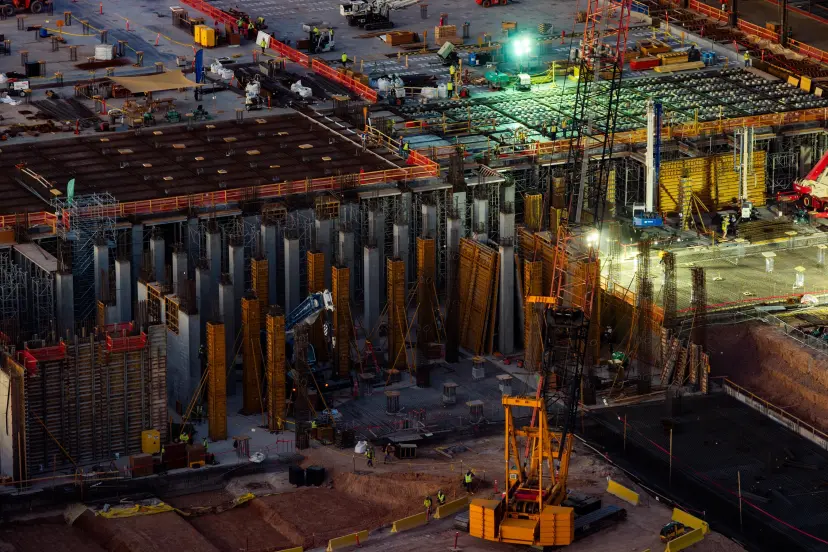
A hulking grey large rises from the desert. Inside, engineers create the drive behind our telephones and computer systems and home equipment, our streaming companies and search engines like google and yahoo and chatbots and vibe-coded apps and web sites. The complicated is concurrently huge and squat, dwarfed by the mountains that encompass it, and it’s limitless. I drive previous one constructing, after which one other, after which the bottom opens up the place building crews have dug up the earth so a 3rd constructing can rise. There’s a car parking zone, after which one other, after which one other. There may be an empty lot on the opposite facet of the road, stuffed with vehicles and the occasional meals truck to feed the 1000’s of laborers who’re busy reworking this expanse of desert into an industrial park. There may be mud, a lot of it, choking the air.
I stand earlier than the savior of Arizona’s economic system. Like all nice deities, it calls for sacrifice. Within the desert, nothing is extra treasured than water, and water is what should be given — almost 5 million gallons a day, every single day, sourced from Phoenix’s municipal provide. The providing has been properly price it.
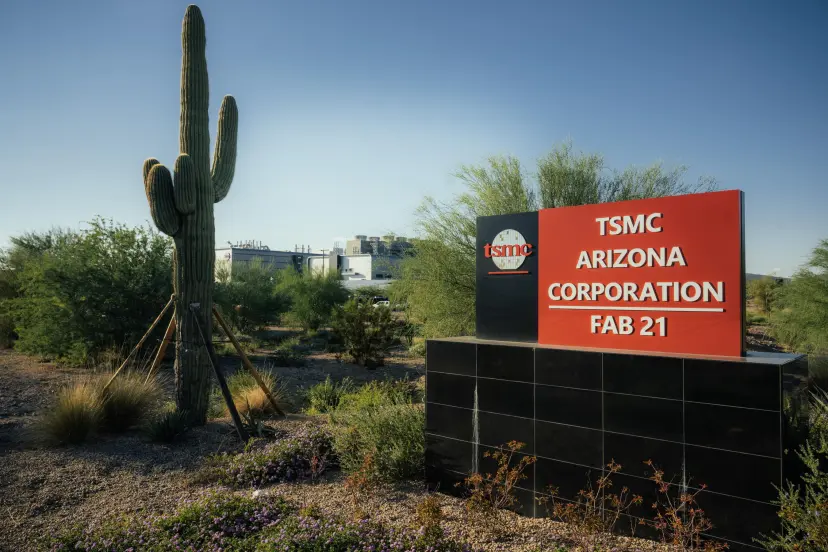
All of that is the fruit of the Taiwan Semiconductor Manufacturing Firm, the world’s main producer of microchips. Its Arizona operation is the results of a pre-pandemic gamble Phoenix made to revive its sluggish economy, which by no means fairly rebounded from the Nice Recession. Now TSMC’s foundry looms over the town’s outskirts.
TSMC is successful story, one which some native leaders might have hoped to repeat with hyperscale knowledge heart developments. The development might have appeared pure: The Grand Canyon State is just not solely residence to the most important chip manufacturing unit this facet of the Pacific but additionally 172 data centers, neither of which confronted a lot pushback. However the newer, bigger developments being proposed from Phoenix to Tucson demand extra of every thing — extra water, extra energy, extra land — than Arizonans are keen to present. The place TSMC was welcomed with open arms and the primary wave of knowledge facilities was largely ignored, new developments are dealing with mass backlash in Arizona, the place a grassroots, surprisingly bipartisan coalition of residents has united towards knowledge facilities.
Now the state has a sixth C, Arizona native Christine Mackay tells me. “Chips.”
In reporting this story, I spoke to native activists and financial builders, elected officers and their indignant constituents. I sat in on metropolis council conferences the place individuals lined up by the handfuls to talk up towards knowledge heart tasks, and in cozy suburban properties the place tight-knit teams of former strangers instructed me concerning the battle that introduced them collectively. I pored over maps of Arizona’s dry, cracked panorama with laypeople who, over the previous two years, have made themselves consultants on zoning and land use and water consumption to allow them to perceive the beast they’re attempting to struggle. The locals on either side of this debate declare to need the identical factor: a greater, extra affluent Arizona. Their visions for attaining it, nonetheless, are utterly at odds.
In Arizona and elsewhere, knowledge heart builders have tried to win over locals by making attractive guarantees concerning the jobs, tax income, and infrastructure they’ll carry with them. All they ask for in change is water — and, they swear, not almost as a lot of it as you’d count on. Some hyperscale knowledge facilities, like Google’s facility in The Dalles, Oregon, use about 1.5 million gallons a day, about one-third of what TSMC’s Arizona complicated consumes in the identical timeframe. These reassurances, nonetheless, aren’t sufficient to assuage Arizonans, who now need to take care of the truth that the state will soon lose access to just about 30 % of the water it receives from the Colorado River.
Even now, as individuals throughout the nation bitter on AI and struggle towards knowledge facilities of their communities, TSMC’s Arizona operation hums alongside with out important opposition. And but it’s not possible to make sense of why Arizonans are so against new knowledge heart growth with out first understanding why they eagerly welcomed TSMC, despite the fact that each industries should take care of the difficulty that has plagued Arizona since its founding: There isn’t sufficient water.
For so long as anybody may bear in mind, enterprise in Arizona revolved across the storied “5 C’s”: cattle, copper, cotton, citrus, and local weather, a catchall for the area’s delicate, salubrious winters, which locals say usually greater than make up for the sweltering summers.
Now the state has a sixth C, Arizona native Christine Mackay tells me. “Chips.”
The TSMC growth is, in a way, Mackay’s doing. As the pinnacle of Phoenix’s financial growth workplace, she spearheaded the trouble that introduced the Taiwanese large to the Sonoran Desert. In 2020, whereas the worldwide economic system was all however shut down, TSMC made an announcement. The identical forces that introduced the world to a standstill had created much more demand for TSMC’s merchandise, and in response, TSMC could be opening a complicated semiconductor foundry — a “fab,” in trade jargon — in Phoenix. Initially, TSMC predicted that it might pour $12 billion into Arizona’s economic system by 2029. Since then, TSMC’s projected expenditure within the state has ballooned to $265 billion, what the corporate touts as the most important overseas direct funding in US historical past.
TSMC simply put the ending touches on its second fab in a previously desolate swath of north Phoenix, with a 3rd beneath building and plans for a number of extra underway. This buildout has been greater than a decade within the making. TSMC began buying round for a US location in 2016. That yr, Mackay stated, the corporate put out a request for proposals via a codename. Nobody gained.
“We aren’t a bunch that takes no for a solution,” Mackay stated proudly. Her workplace requested TSMC executives what they thought Arizona was lacking, after which spent the following three years addressing their issues. In 2019, Phoenix despatched a delegation to Taiwan to share a brand new growth plan for a science and expertise park, the nucleus of which might be a manufacturing unit, ideally one in every of TSMC’s fabs. “They agreed they wanted to return again and take one other take a look at Phoenix,” Mackay instructed me. Her crew confirmed them two places: Laveen, Arizona, a suburb southwest of Phoenix, and, simply north of the town, an undeveloped space roughly the dimensions of Manhattan referred to as Biscuit Flats, so named, Mackay instructed me, as a result of “it’s as spherical and flat as a biscuit.”
“That very day,” she recalled, “they stated, ‘This might work.’”
What adopted was a flurry of growth not like something the state has ever seen. TSMC has introduced greater than 3,500 jobs to the state, and a complete economic system has sprung as much as help the corporate’s Arizona operation. Very similar to in Taiwan — the place the corporate accounts for almost one-tenth of Taiwan’s gross home product — TSMC has change into, if not the middle of the universe, then a minimum of a galaxy unto itself. The corporate controls an estimated 70 percent of the worldwide chip market, and its contracts with Apple and Nvidia alone make up greater than one-third of its annual income. (Apple and Nvidia design their very own chips, however they don’t produce them. The complicated manufacturing course of is as an alternative largely outsourced to TSMC.)
TSMC has modified swaths of Phoenix — its panorama, its industries — and it has introduced with it jobs and prosperity. Locals worry that the brand new hyperscale knowledge heart developments will do the previous however not the latter, consuming sources whereas contributing little to the neighborhood. Mackay, who has labored as an financial developer for over 30 years, didn’t expertise important pushback when she helped courtroom knowledge heart developments up to now. “The primary 10 knowledge facilities I did appear like fairly little workplace buildings,” she stated.
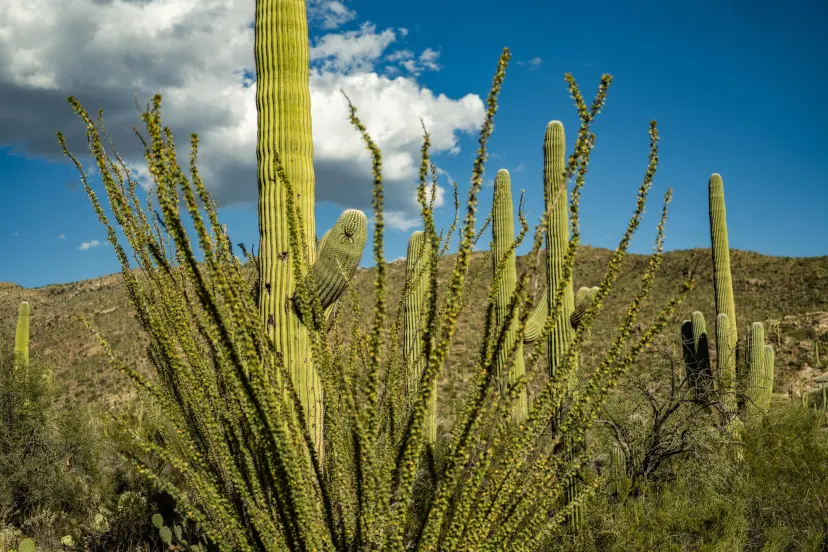
The brand new developments being proposed are neither fairly nor little. The place earlier knowledge facilities had been inconspicuous, the hyperscale amenities builders wish to construct in Arizona — usually on rural farm or desert land — are each huge and incongruous. Regardless of the state’s just lately acquired fame for sprawl, there are nonetheless loads of locations the place, within the quiet desert stillness, you possibly can typically hear a pack of coyotes howl in the midst of the night time. There are dark-sky corridors and wild animals, ghost cities and saguaro forests. All of this, some locals say, might be sacrificed for the good thing about an trade that additionally poses an existential menace to humanity. There are moral questions and environmental ones, debates over zoning and taxes and, most of all, over water. But the cities and the outlying suburbs continue to grow, spreading in all instructions till they’re constrained by geography or paperwork or Indigenous sovereignty. And trade, someway, retains arriving, thirstier than ever.
12 months-round however particularly within the summers, Arizonans tailor their routines to the weather. Drivers are cautious to not get caught in mud storms or monsoons. Joggers keep away from going out in late mornings and early afternoons, when the warmth is at its most intense. And on August 1st, on the peak of monsoon season, the No Desert Knowledge Heart Coalition’s protest started within the early night, when the solar’s punishing rays had been beginning to give option to a muted desert sundown.
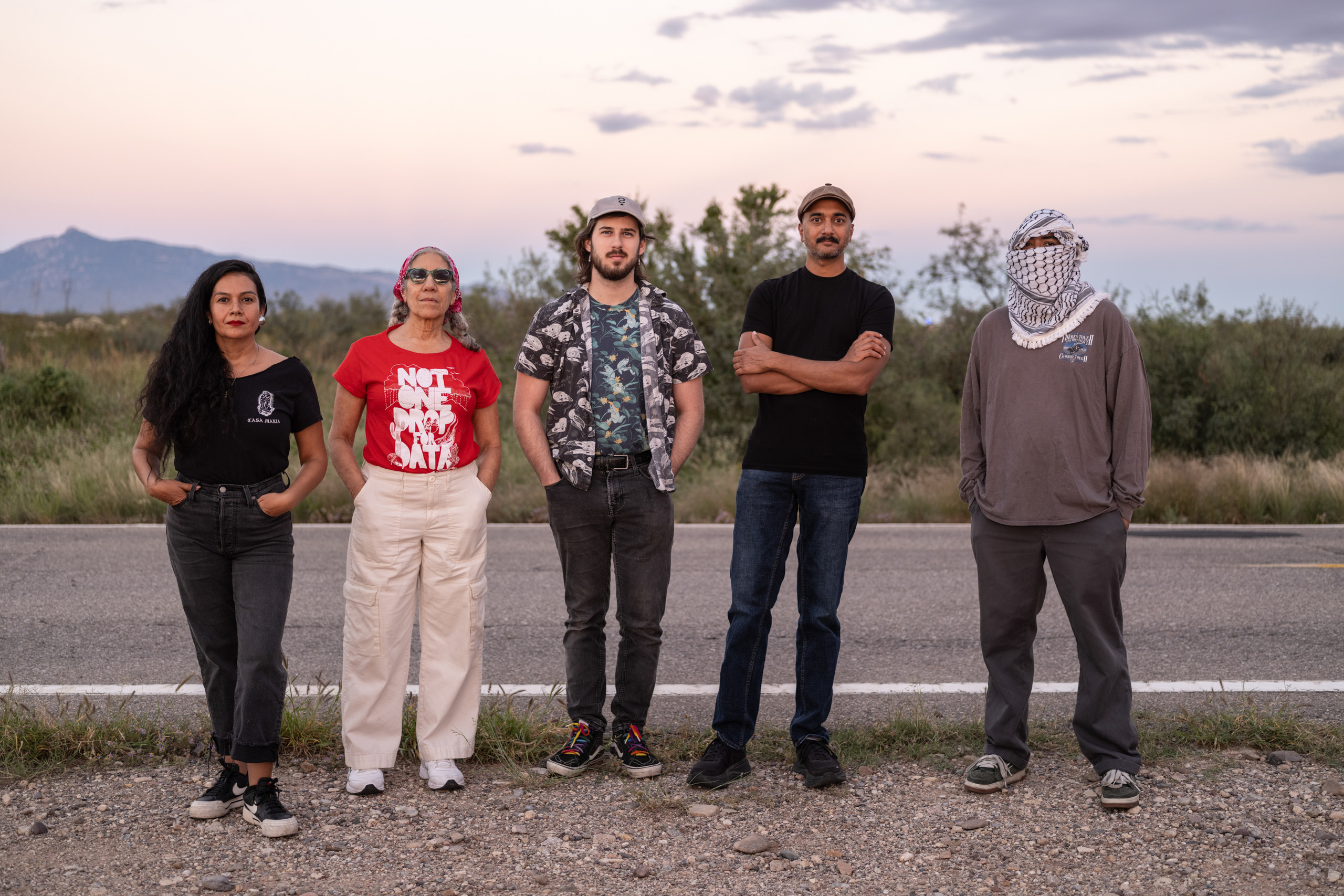
A few dozen individuals confirmed as much as the rally on the outskirts of Tucson, in entrance of the 290-acre website the place Beale Infrastructure is constructing a 600-megawatt knowledge heart. Each couple of minutes, Vivek Bharathan, one of many organizers, reminded the protesters to remain hydrated. Kids sprayed one another with water weapons and dutifully accepted drinks from their dad and mom. Mayra Duron, one of many attendees, introduced a cooler of agua de jamaicato share with the group. The magenta beverage, she stated, was stuffed with electrolytes. Water — the dearth of it, the necessity for it, the quantity required to construct an enormous knowledge heart in the midst of the desert — was prime of thoughts. A hand-painted banner expressed the overarching sentiment: BEALE’S DATA CENTER WILL SUCK US DRY.
“If you happen to really feel the warmth, please head residence,” Bharathan instructed the small crowd. “It’s a scorching day, and in the event that they reach constructing a knowledge heart right here, it’ll be even hotter. We all know these items create heat islands that may have an effect on the encircling space by over 10 levels Fahrenheit.” Duron, an area macrame artist who incorporates cactus spines into her weaving, stated she fearful about how rising temperatures would have an effect on the area’s saguaros. “In Phoenix, it’s hyper-industrialized,” she stated, “they usually’ve seen saguaros die left and proper.”
Vehicles honked in help. Some drivers pumped their fists out their home windows as they sped by. Arizonans weren’t riled up about AI in 2019, when the TSMC mission was introduced, nor did they discover or care a lot concerning the earlier knowledge facilities that had been quietly constructed all through the state. Issues have modified. Tucson, it seems, is united in its opposition to the information heart complicated dubbed Mission Blue. However the buildings are going up anyway.
“We take it as regular as a result of it’s been that means for thus lengthy. But it surely isn’t regular. It’s a disaster.”
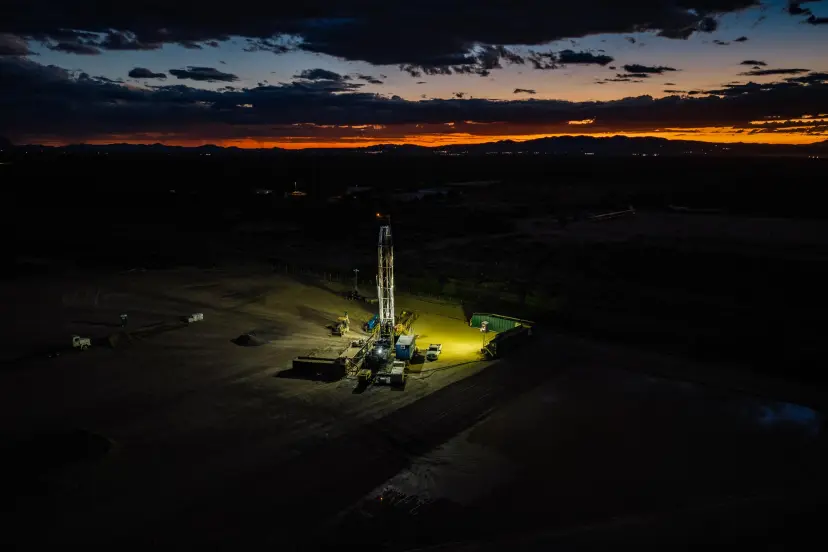
Details about Mission Blue started slowly trickling out within the spring of 2025. First got here the identify, and some clues: The event, no matter it was, could be on a county-owned plot of land; it might create 3,000 non permanent building jobs and 200 well-paying positions down the highway; it might generate $152 million in tax income over the following decade; it might be large, and it might be thirsty, and new water traces could be constructed to maintain it satiated. That was all anybody within the know would say, as a result of the county authorities, which owned the land, signed a nondisclosure settlement with the would-be developer.
The information got here out in an earthly, bureaucratic means, as details about potential land gross sales in midsize cities usually does. In June 2025, Jan Lesher, the Pima County administrator, submitted a 44-page memo to the Board of Supervisors. The phrases “knowledge heart” didn’t seem till the fourth web page. This knowledge heart would offer an “unprecedented” $3.6 billion alternative for Tucson and for the county. There have been different particulars, and there was flattery, and there have been guarantees. Mission Blue would use “100% renewable water sources.” Its developer, Beale Infrastructure, would construct crucial infrastructure at its personal expense, together with an 18-mile pipe extension and an aquifer recharge facility.
“The enhance it may present to our native economic system might be transformative,” Rex Scott, one in every of 5 members of the County Board of Supervisors, said at the time. His colleagues had been cut up. They voted 3-2 to rezone the 290-acre tract, and voted once more to promote it to Beale for round $20 million. But it surely wasn’t a assure but. One of many phrases of the deal required Tucson to annex the land and approve the sale, because the metropolis could be on the hook for the land’s water service.
The honeymoon, if there even was one, didn’t final. Simply hours after the board’s vote, Tucson Electrical Energy announced it was wanting right into a charge hike that may improve clients’ payments by a mean of 14 %. The utility claimed the choice was unrelated to the forthcoming knowledge heart. Even nonetheless, one of many commissioners who voted to rezone the land and promote it to Beale formally requested to rethink the rezoning.
Maybe it was the truth that Tucsonans realized of the information heart and the speed hike in such fast succession, coupled with the inescapable information of data centers raising locals’ utility bills, that catalyzed their mass opposition. Possibly it was the Arizona Mirror’s report that Mission Blue, mixed with one other proposed knowledge heart, wouldn’t solely be TEP’s largest buyer but additionally eat greater than 4 golf programs’ price of water every year. The truth that Amazon Net Companies was reportedly the top consumer — and that county officers had been discussing the mission since 2023, and, in response to public information obtained by Arizona Luminaria, signed NDAs prohibiting them from naming the businesses concerned — actually didn’t assist. Regardless of the purpose, Beale executives most likely weren’t ready for simply how indignant the general public could be.
Round 200 individuals confirmed as much as a public data assembly Beale hosted within the auditorium of an area highschool in July 2025. Most of them had been livid concerning the knowledge heart, or they had been fearful, or they had been scared. Tensions had been even higher on the follow-up assembly held on the Tucson Conference Heart. Over a thousand individuals confirmed up. The boos began earlier than Beale’s representatives obtained via their introductions, they usually continued all through the night time.
Keri Silvyn, one of many attorneys representing Beale, tried to heat up the group. “All of us have cellphones, we now have computer systems, a lot of us have a number of of these in our households,” she stated. “Most of the varied indicators that I’ve seen have QR codes, that in case you click on on, will take you thru a knowledge heart so as to get to completely different websites. The web is housed in knowledge facilities. That’s what they’re.” Beale’s crew defined that they chose the location as a result of it was removed from residential areas, after which they reiterated the now acquainted pitch knowledge heart builders make to cautious communities. Beale stated it might pay for a pipeline, and as soon as the pipeline was constructed the information heart would run on reclaimed water. (Till then, nonetheless, it might depend on potable water.) The corporate would pay to scrub up contaminated water. It might inject any additional water into native aquifers, finally making the entire thing “water-positive.” None of this mollified the thousand or so individuals within the viewers, who booed each couple of minutes.
To nobody’s shock, the opposition largely got here all the way down to water. Locals fearful that if the information heart got here to city, the useful resource, already so scarce and so treasured, would vanish. They cited the truth that Arizona would seemingly lose extra of its Colorado River allotment. They conjured pictures of even hotter, drier summers.
“Are you able to assure us water for future generations?”
When it was her flip to talk, Melanie Cooley, an training specialist on the Watershed Administration Group, an area habitat restoration nonprofit, conjured up a previous acquainted to few Tucsonans. “The place we’re sitting proper now was a forest 125 years in the past that adjoined a flowing river that flowed year-round,” she stated. “There are individuals alive immediately who grew up swimming within the Santa Cruz River.”
Common temperatures in Tucson are actually 11 levels Fahrenheit increased than they had been a century in the past, Cooley stated. About six levels of that rise may be attributed to international warming. The opposite 5, Cooley defined, are due to adjustments within the native ecosystem, together with the felling of forests and the drying up of rivers just like the Santa Cruz. “What we see immediately after we drive throughout that river that appears like an enormous, dry ditch, we take it as regular as a result of it’s been that means for thus lengthy. But it surely isn’t regular. It’s a disaster. It’s a disaster that was introduced on by overpumping of our groundwater and dangerous growth choices, and Mission Blue is one other dangerous growth resolution.”
One other speaker in contrast Mission Blue to industrial tasks of a long time previous. “That is like déjà vu for me,” he stated, itemizing off financial growth tasks that had been supposed to show issues round for the town: Raytheon; Hughes, the navy contractor that preceded it; the Air Nationwide Guard. “What did they do? They contaminated our water. To today, we’re having to take care of that.” Tucsonans had gone to nice lengths to preserve their water. “We took our landscaping out, we took our swimming swimming pools out.” He waved over a relative who was holding an toddler in a sling. “Are you able to assure us water for future generations?” he requested the Beale representatives. “Are you able to assure water for her era, my youngsters’ era, my grandkids’ era, and this little child’s era?”
Two days after this contentious listening to, a unanimous vote by the Tucson Metropolis Council shut down the annexation of the land. At a subsequent assembly, the town adopted new guidelines for knowledge facilities and different massive water customers. Residents had been relieved, however not for lengthy. Three weeks after the town stopped the annexation, successfully killing the event, local reporters confirmed that Beale was transferring ahead with the information heart anyway. County officers and Beale representatives had beforehand stated that the deal was contingent on Tucson’s annexation of the land. Instantly that was not a problem. (Beale declined to touch upon why annexation was not needed for the deal.)
Over time, there have been different changes to the plan: The information heart would not be water-cooled and would as an alternative depend on closed-loop air cooling. If the shift was meant to win over Beale’s critics, it didn’t work. Members of the No Desert Knowledge Heart Coalition declare that air-cooled amenities use extra electrical energy, and, since energy vegetation additionally use water to chill their techniques, air-cooled knowledge facilities may very well be extra water-intensive, simply not directly, an allegation Beale denies. “Using air-cooled expertise for this mission doesn’t improve general power use; whereas the power allocation is completely different, the power use is similar,” Beale spokesperson Tony Burkart, the Beale spokesperson, instructed The Verge. (Vitality era does require water, although there’s little data on simply how a lot water Arizona’s energy vegetation eat.) The change additionally value Beale a tenant: Amazon reportedly pulled out of the project, saying an air-cooled facility wouldn’t meet its wants. Beale declined to reveal whether or not it has since discovered a brand new tenant for Mission Blue. “It’s as much as our tenants after they select to announce their funding in a mission,” Burkart stated.
Nonetheless, the mission moved ahead. The county accomplished its take care of Beale on Christmas Eve, and Beale promised to carry much more items within the type of $15 million in donations, a few of which might go towards native STEM and commerce faculty packages. The brand new yr introduced extra challenges. The state’s lawyer basic filed an attraction towards the Arizona Corporation Commission, the state company that oversees public utilities, over its approval of a particular power settlement between Beale and TEP. Members of the No Desert Knowledge Heart Coalition filed a separate lawsuit alleging that the county’s dealings with Beale violated the state’s open assembly regulation.
Picture 1 of 4
Within the Ahwatukee space of Phoenix, locals push again towards knowledge heart building.
Protesting locals pointed to previous financial growth tasks from Raytheon and Hughes that they are saying contaminated their water.
Tucson is 11 levels hotter on common than it was; 5 of these levels may be chalked as much as adjustments within the native ecosystem, not simply local weather change.
Lower than 100 years in the past, the Santa Cruz River nonetheless flowed in Tucson. At the moment it’s lengthy gone.
The coalition’s go well with obtained tossed, however the knowledge heart’s opponents discovered different methods to voice their displeasure. They staged a protest contained in the places of work of Lazarus and Silvyn, the regulation agency representing Beale in its dealings with the county. When building crews broke ground on the location, dozens of individuals had been there, blocking autos whereas chanting, “We respect the employees, we don’t respect the work.” The information heart’s opponents haven’t been in a position to cease building altogether, however they’ve managed to sluggish it. After observers affiliated with No Desert Knowledge Heart seen that contractors with Ames Building had been using city-owned hydrants, officers demanded that Beale give the town water credit to replenish the roughly 651,702 gallons of consuming water used for mud management. (A number of native ordinances require building crews to spray water to mitigate the air air pollution brought on by blowing mud.) Burkart, the Beale spokesperson, stated the contractor “adopted customary procedures and the Metropolis issued a allow for non permanent water per the traditional course of enterprise.” After Ames stopped utilizing metropolis water, officers with the Pima County Division of Environmental High quality additionally discovered the contractors in violation of their “fugitive dust permit” on two separate occasions, every of which may carry a high quality of as much as $10,000. And when Ames turned to a Tucson inexperienced waste facility for water, protesters flooded the subcontractor with phone calls till its proprietor dropped the contract.
None of this grassroots opposition, nonetheless, has been sufficient to really cease Mission Blue. To facilitate building, the Arizona Division of Water approved a request to construct two wells on the location, permitting the power to attract up 31 million gallons of groundwater a yr. Burkart stated this water will solely be used for building. As soon as the information heart is up and working, Burkart stated, water use “will probably be restricted to abnormal home functions, reminiscent of restrooms, worker kitchens and well being and security.”
Some native leaders have since labored to regain the neighborhood’s belief. After a contentious assembly in August, the Tucson Metropolis Council carried out new, stringent limits on data centers, making them probably the most regulated developments within the metropolis. However residents need extra, they usually’ve vowed to maintain displaying up till they get a full ban. Even the county authorities has been surprisingly amenable of late. In September, the Pima County Board of Supervisors imposed a 120-day moratorium on new knowledge heart tasks. However that doesn’t imply different developments are off the desk. In March, the county introduced it might be placing a number of the proceeds of the Beale land sale towards hiring an financial developer. The purpose of the job, which comes with an annual wage of $150,000, could be to carry overseas direct investments to Tucson. Town, it appears, is on the lookout for a Christine Mackay of its personal — and possibly a TSMC, too.
Rebecca Chen understood the promise of TSMC properly earlier than most different Arizonans. A Phoenix resident since 2015, she began working as a Realtor in 2019, simply earlier than the corporate arrived. “TSMC is probably not an enormous family identify for lots of People, however it’s for Asians,” Chen stated. “TSMC is principally like Apple or Tesla for Taiwanese.” The covid-19 pandemic despatched the trade right into a frenzy: People, largely confined to their properties, wished area and sunshine and relocated to the Solar Belt in droves, and Arizona was no exception. Nonetheless, Chen knew this was nothing in comparison with what TSMC would carry. She was launched to her first Taiwanese consumer by an trade pal in California, and shortly the referrals had been piling up. She offered properties just about, displaying them to purchasers by way of video name; some TSMC employees purchased homes sight unseen.
“I really feel like I’m far more than a Realtor,” Chen instructed me. “I’m like a information to them.” She’s helped purchasers arrange utility payments, get their driver’s licenses, really useful locations to eat and store. “I’m an immigrant myself,” she defined, so she is aware of how laborious it may be to really feel settled in a brand new place. Arizona’s Taiwanese immigrants have risked lots in coming to America, staking their futures on a brand new mission in an unknown place at a time of maximum nativist backlash. It’s a leap of religion, and it seems to have labored out.
TSMC’s presence in Arizona has revived a lifestyle some thought had vanished in America: a affluent family the place one associate (often male) works at a manufacturing unit and earns sufficient to help a household. Consider it because the midcentury superb with a brand new international twist, suburban idyll propped up by industrial manufacturing. TSMC now has greater than 3,500 workers in Arizona, in response to spokesperson William Moss, who stated the corporate doesn’t disclose the variety of worldwide employees it has, which may fluctuate relying on the mission. Early experiences claimed that about half of TSMC’s 2,200 workers at a single fab had been from Taiwan. Nonetheless, it’s plain that TSMC’s presence in Arizona has led to an inflow of Taiwanese immigrants within the Phoenix metro space — all whereas the Trump administration wages a full-fledged assault on authorized immigration. TSMC is now working to domesticate native expertise. In Might, the corporate announced it was beginning a semiconductor technician coaching program at Arizona State College, and the college just lately signed on to a White House initiative to construct up America’s manufacturing workforce. As a part of the partnership, ASU will manage a “Foundry College” taught by consultants from Japan, South Korea, India, and Taiwan.
New companies have popped as much as cater to Arizona’s rising Taiwanese neighborhood, additional bolstering the native economic system. North Phoenix now has a Little Taipei. Eating places have opened to cater to those new Arizonans, some opened by the newcomers themselves. Buildings have popped up seemingly in a single day to deal with them. Mandarin-speaking actual property brokers like Chen have discovered a profitable area of interest promoting luxe new-build properties to well-compensated tech employees, together with workers of TSMC suppliers. The state has added a brand new vacation to its unofficial calendar: October tenth, or Double Ten Day, a commemoration of the rebellion that felled the Qing dynasty. Phoenix is now residence to the most important Double Ten celebration in North America. Annually, 1000’s of spectators ooh and aah at a drone present sponsored by TSMC. China Airways began providing direct flights between Phoenix and Taipei in 2025. Taiwan’s Starlux Airways quickly adopted go well with. The Hilton Backyard Inn I stayed in, situated simply 10 minutes from the TSMC campus, served congee for breakfast. Scottsdale now has a Din Tai Fung. Reservations are laborious to get.
“We name it the financial worth of a gallon of water.”
A few of these adjustments occurred organically; others resulted from meticulous planning. Mackay, the financial developer, instructed me that the native grocery chain Fry’s reached out to her workplace to ask what merchandise Taiwanese clients may wish to see on its cabinets. Mackay arrange a gathering between Fry’s and TSMC, and he or she arrange one other with a Taiwanese lawyer who labored with the state Division of Transportation to make sure Taiwanese immigrants’ driver’s licenses could be legitimate in Arizona. Working alongside Phoenix Sister Cities, a nonprofit that began in 1972, Mackay’s workplace put collectively a crew of Mandarin-speaking medical doctors and nurses to serve Taiwanese immigrants of their native language.
Phoenix and Taipei have been sister cities since 1979, a designation that, till just lately, was largely ceremonial. As is the case in all sororal relationships, there have been conflicts, a few of them over shared sources. Given the trade’s calls for and the state’s historic drought, critics ask, is it sensible to construct water-guzzling factories in the midst of the desert?
TSMC hasn’t confronted almost as a lot pushback for its water use as knowledge facilities have, however semiconductor manufacturing nonetheless requires huge quantities of water, and this water should be of a selected grade — freed from contaminants natural or in any other case, and so devoid of minerals that it’s truly not really useful for human consumption. It takes 1.4 to 1.6 gallons of municipal water to create a single gallon of ultrapure water, since some is inevitably misplaced to evaporation within the course of.
Every chip requires 50 to 250 wash cycles, Paul Westerhoff, the director of ASU’s International Heart for Water Know-how, instructed me. “If there’s slightly particle in there, or an ion-like chloride in there, the factor doesn’t work,” Westerhoff stated, “so they should use plenty of water in every of those cleansing cycles.” This course of requires 4.75 million gallons of water every day, which TSMC obtains via Phoenix’s municipal water provide. The Arizona Republic experiences that TSMC largely makes use of reclaimed wastewater, with some groundwater as properly.
Westerhoff in contrast the method of semiconductor manufacturing to washing dishes. And similar to you wouldn’t reuse your sink water to scrub a second spherical of pots and pans, chip producers can’t reuse their soiled water to scrub different chips. However this water isn’t completely misplaced. “If you wish to reuse sink water, possibly you throw it out in your garden,” Westerhoff stated. He defined that TSMC makes use of 20 % or so of its recycled water to energy its evaporative cooling techniques. A part of Westerhoff’s function is to determine new methods for TSMC to make use of its extra wastewater — hopefully, sometime, as a part of the chip manufacturing course of itself.
Sarah Porter, the director of ASU’s Kyl Heart for Water Coverage, defined that whereas 15 to twenty % of the water TSMC makes use of is misplaced to evaporation, a lot of the remaining is processed within the firm’s recycling plant. In keeping with Porter, TSMC recycles 60 to 65 % of the water that flows via its first Arizona fab and is planning for 90 % reuse by 2028. To get there, TSMC is constructing an on-site reclamation facility. The last word purpose, nonetheless, is to determine the best way to use reclaimed water within the manufacturing course of. Westerhoff has called this the “holy grail.”
“Once we’re speaking about semiconductor manufacturing, that’s very completely different from, say, a golf course.”
The truth that TSMC can recycle a lot of the water it consumes differentiates it from a number of the state’s conventional industries. And even when TSMC had been to sometime use extra water than a few of Arizona’s extra standard enterprises, the area’s leaders say the tradeoff could be properly price it. “We name it the financial worth of a gallon of water,” Mackay instructed me. “That gallon of water can do an enormous quantity for the area, or it will possibly do nothing for the area.” In Mackay’s estimation, TSMC has earned its preserve after which some.
TSMC introduced with it a complete trade. To date, 55 TSMC suppliers have arrange store in Arizona, as per Mackay, and extra are on their means. Topco Scientific, a Taiwanese supplies integrator that works intently with TSMC, opened an outpost in Phoenix in 2022, working at a loss for years till TSMC’s first fab was up and working. Chang Chun, a Taiwanese petrochemical agency, now manufactures electronic-grade hydrogen peroxide in Casa Grande, a metropolis of some 70,000 individuals midway between Phoenix and Tucson. Rebecca Chen, the Phoenix-based actual property agent, has moved into the industrial and industrial market, which she stated is hotter than ever. Utilized Supplies, one other provider, opened a $270 million analysis and growth facility at ASU final fall. New building tasks are underway, lots of them clustered round TSMC’s rising campus. Amongst them is Halo Vista, a $7 billion, 2,300-acre master-planned neighborhood developed by a New York actual property agency. Enterprise is booming. TSMC reported $514 million in profit at its Arizona website in 2025, its first full yr of manufacturing. And the typical hourly wage within the Phoenix metro space climbed to $33.48 from $22.85 a decade earlier, outpacing inflation.
The TSMC complicated makes use of extra water in 9 days than Mission Blue is anticipated to eat in a yr, however TSMC has additionally boosted the state economic system in a means no knowledge heart may. Knowledge heart builders used to pitch the tasks to native governments by emphasizing the truth that they don’t create many everlasting jobs; communities would get infrastructure and tax income however not one of the congestion that comes with fast inhabitants progress. However now, after years of AI executives warning that the product they’re constructing may vaporize entry-level work — and probably trigger a literal apocalypse — extra communities see knowledge facilities as a lose-lose proposition. TSMC’s chips make the generative AI increase potential, however not like knowledge facilities and AI itself, they really create jobs.
“Once we’re speaking about semiconductor manufacturing, that’s very completely different from, say, a golf course,” Porter stated. Arizona’s golf programs, in truth, have traditionally used way more water than the state permits, a lot of it sourced from the quickly drying Colorado River. An investigation by The Arizona Republic discovered that the state’s golf programs consumed almost 39 billion gallons every year between 2002 and 2022. “That water,” Porter added, “is just not reclaimed.” The place TSMC can undergo as a lot as 1.7 billion gallons of water a yr, a lot of which is recycled, golf golf equipment and programs in Arizona’s lively administration areas consumed upwards of 41 billion gallons of water in 2020 alone — and that water is basically misplaced to evaporation. And nonetheless, golf programs use simply 2 % of Arizona’s water, or 9 % of water in municipal areas. In the case of general water use, placing greens and semiconductor producers are, to make use of an apt flip of phrase, a drop within the bucket.
However critics of semiconductor manufacturing say that the quantity of water the trade makes use of is simply a part of the issue. “There’s water high quality, and there’s water amount — or water use and water contamination,” Judith Barish, the coalition director of CHIPS Communities United, instructed me. The coalition, made up largely of labor and environmental teams, was based within the wake of the CHIPS and Science Act, which designated $52.7 billion in funding for home semiconductor manufacturing. Its purpose is to make sure that communities, not companies, reap the advantages of the tech increase.
Semiconductor manufacturing includes the usage of a whole lot of various per- and polyfluoroalkyl substances, or PFAS, that are generally known as without end chemical compounds as a result of they don’t naturally break down. The sturdiness of those chemical compounds means they gained’t be degraded throughout the manufacturing course of, which may contain a whole lot and even 1000’s of steps. However the qualities that make PFAS so important to chipmaking are exactly what make them so harmful to individuals. Some researchers have linked without end chemical compounds to liver and kidney points, excessive ldl cholesterol, beginning defects, and varied cancers. Using without end chemical compounds isn’t restricted to chip manufacturing, or to the tech trade writ massive — PFAS have been found in nonstick pans, dental floss, shampoo, menstrual care merchandise, meals packaging, and even meals itself — however the semiconductor trade, by nature of the manufacturing course of, makes use of a major quantity of chemical compounds which might be detrimental to human well being.
Some researchers have linked chip manufacturing to thyroid and liver ailments, fertility issues, and most cancers — an particularly ironic end result, given AI boosters’ claims that the expertise will remedy most cancers inside our lifetimes. Ladies who labored in chip fabs throughout the ’80s manufacturing heyday had been twice as likely to undergo miscarriages than ladies who didn’t, and their youngsters had been additionally extra more likely to expertise beginning defects. And since every step of semiconductor manufacturing requires 1000’s of gallons of water, these chemical compounds in the end change into liquid waste. A single fab can produce tens or a whole lot of 1000’s of gallons of wastewater a day, discharge one bimolecular researcher described as a veritable “soup” of without end chemical compounds.
Conventional wastewater remedy strategies usually fail to detect without end chemical compounds, and most semiconductor producers aren’t required to watch or check for PFAS. Compounding the issue, the precise chemical cocktails utilized in chip fabs are intently guarded commerce secrets and techniques. However TSMC says it has “constantly optimized” its in-house PFAS detection techniques and is growing applied sciences to take away PFAS from its wastewater streams. The corporate additionally says it’s learning how and when it will possibly use non-PFAS options within the manufacturing course of. And Porter identified that not like Tucson, the place groundwater has been contaminated by military bases and manufacturing, Phoenix doesn’t have a lot of a PFAS drawback, and metropolis leaders are desirous about preserving it that means. Phoenix requires TSMC to deal with its water earlier than placing it again into the municipal wastewater system, Porter stated. And all Arizona cities are required to adjust to requirements set by the Environmental Safety Company.
Nonetheless, for organizers like Barish, wastewater disposal stays a priority. Whereas TSMC and different chip producers need to adjust to metropolis and EPA requirements, Donald Trump has largely defanged the EPA and eased restrictions on PFAS in drinking water since returning to workplace. However concessions for chip producers have been largely bipartisan. The Constructing Chips in America Act — sponsored by Sen. Mark Kelly (D-AZ) and signed into regulation by President Joe Biden — exempted semiconductor manufacturing from key environmental evaluate.
Arizonans have gone to nice lengths to scale back their water consumption and to roll again the economic air pollution that has tainted groundwater in Tucson and surrounding communities for many years. Nonetheless, consultants say the mess brought on by PFAS could take generations to clean up. And because the state’s economic system turns into more and more tied to tech — which not solely makes use of large quantities of water but additionally produces industrial waste — some residents worry an much more parched Arizona, a drought exacerbated by the promise of trade.
The perpetrator there isn’t inhabitants progress or heavy trade, a minimum of not in the way in which most individuals consider it. It’s agriculture
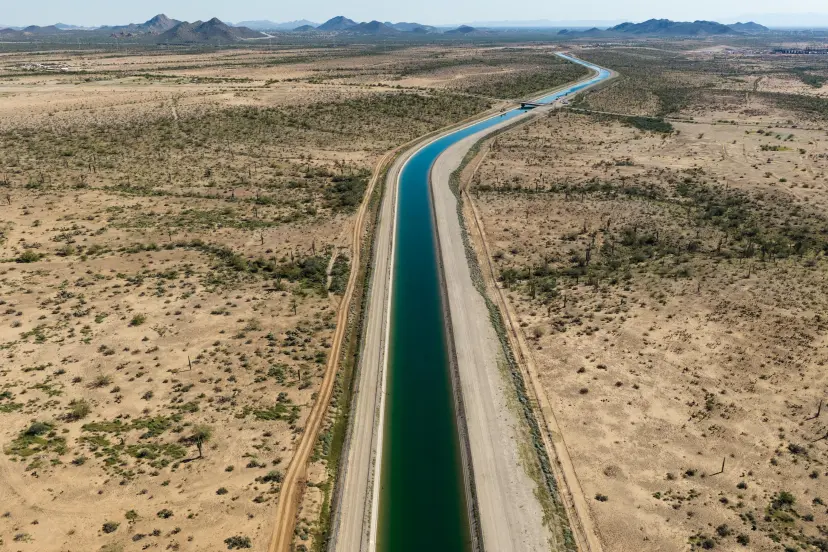
Arizona’s historic megadrought was set in movement properly earlier than any a part of the tech trade gained a foothold within the Grand Canyon State. It’s an nearly cartoonishly easy challenge of provide and demand, one whose penalties are complicated and nonetheless unsure. Hotter and drier summers within the Rocky Mountains are drying up the Colorado River, the supply of greater than one-third of Arizona’s water. On the similar time, Arizona’s aquifers are being drained far sooner than they are often replenished. The latter is an issue of demand, the previous one in every of provide. Collectively, they add as much as a disaster over a century within the making.
The 1922 Colorado River Compact — the settlement that determines how a lot of the river’s water to allocate to seven states — concurrently overestimated the long-term provide of water and underestimated the demand. Legislators in 1922 couldn’t have foreseen the midcentury inhabitants increase or the severity of local weather change. However this alone doesn’t clarify Arizona’s present water woes. There’s additionally the matter of Arizona’s dwindling aquifers. The perpetrator there isn’t inhabitants progress or heavy trade, a minimum of not in the way in which most individuals consider it. It’s agriculture, an extractive, hyperindustrialized course of unto itself. Arizona’s now romanticized 5 C’s had been largely delivered to the state from elsewhere, they usually proceed to make use of way more water than an informal observer imagines or expects. You may’t develop cotton and citrus within the desert, nor are you able to elevate cattle, with out water — numerous it.
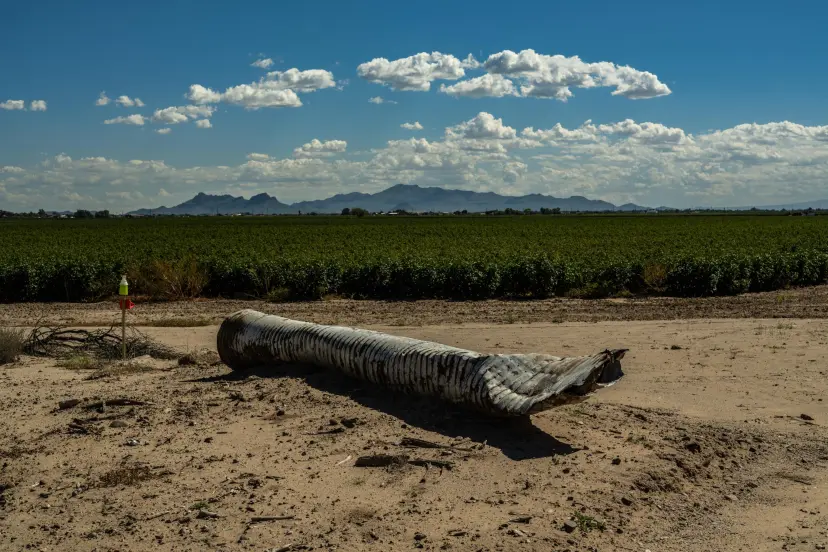
Over the previous decade, one commodity crop, more and more dominated by hedge funds and overseas buyers, has change into a kind of scapegoat for the state’s water woes: alfalfa. Its presence is incongruous and inescapable, shocks of inexperienced in a sea of clay. Each few dozen miles, the earth-toned monotony that surrounds I-10, the artery connecting Tucson and Phoenix, is interrupted by fields of the stuff. The plant — technically a legume — is grown as cow feed, fueling one of many state’s oldest and most romanticized industries. Extra just lately, nonetheless, deep-pocketed outsiders began getting in on the sport, rising alfalfa to provide hay for herds abroad. Till 2011, nearly all of Arizona’s alfalfa crop was consumed contained in the state. After which Fondomonte moved in.
Picture 1 of 3
An alfalfa discipline alongside Interstate 10 in Arizona.
Interstate 10 runs between Tucson and Phoenix.
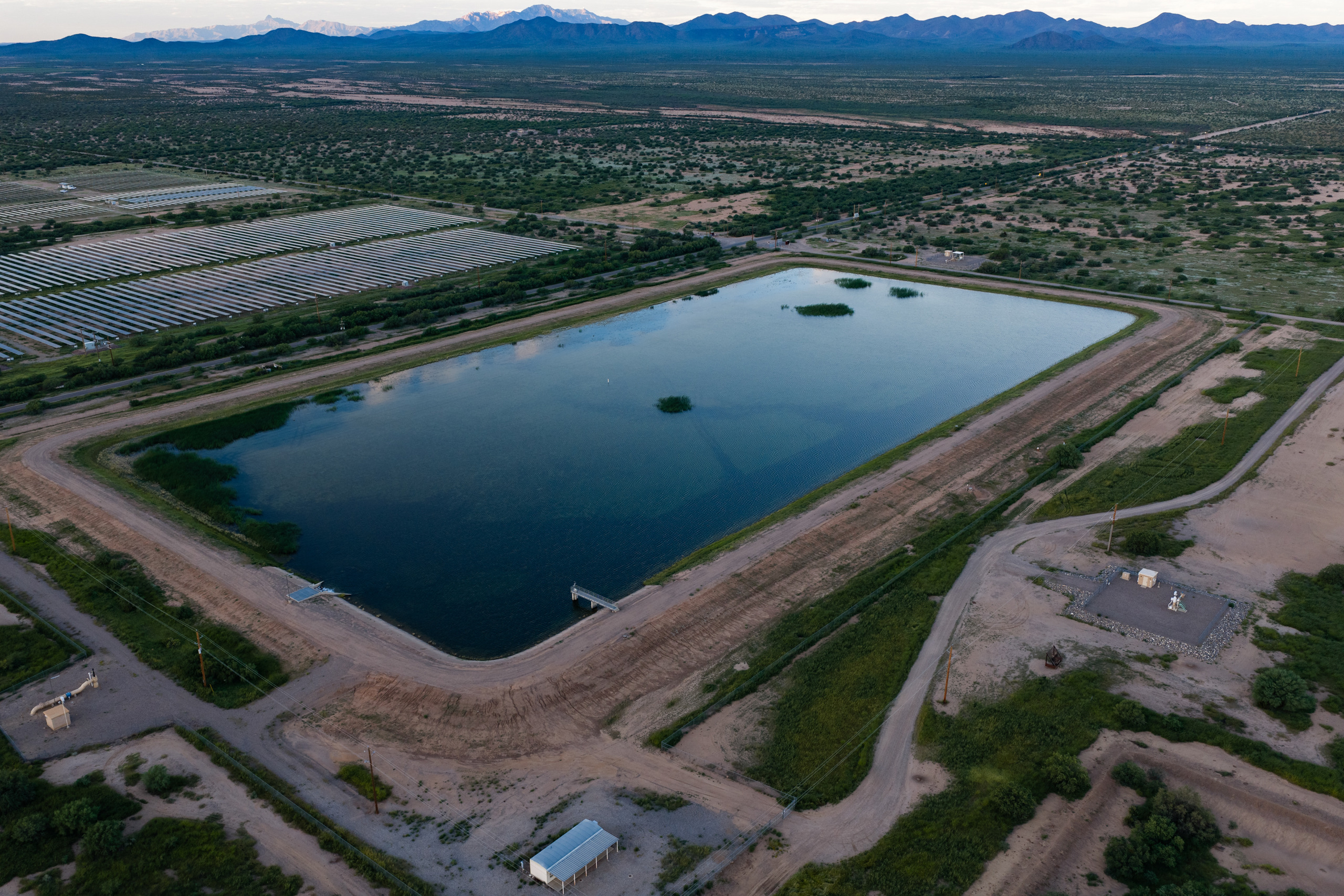
A photo voltaic array close to the location of a proposed knowledge heart in Marana, round 20 miles northwest of Tucson.
Fondomonte, a subsidiary of the Saudi dairy firm Almarai, purchased a 14,000-acre plot of land simply off the I-10 in 2014, as a part of what the Center East Coverage Council described as a strategy of “growing farm sources in land-rich, cash-poor international locations world wide.” Different overseas buyers quickly adopted. The United Arab Emirates-based Al Dahra opened an alfalfa farm of its personal in La Paz County, on the state’s border with California; an enormous Minnesota-owned dairy bought up greater than 50,000 acres in Cochise County.
One may take a look at this exterior funding as a continuation — or maybe an escalation — of the cattle economic system that has sustained Arizona because the arrival of the primary Catholic missionaries. However these industrial megafarms are consuming extra water than ever earlier than, at a time when the useful resource has by no means been extra scarce. For over a decade, Arizonans have urged the federal government to do one thing about these industrial alfalfa farms. This yr, they lastly obtained their means. In January, the backlash turned so pronounced that Gov. Katie Hobbs decreased Fondomonte’s water access. Nonetheless, the corporate is just one among many. All instructed, the animal feed trade has a major presence in Arizona, the place alfalfa alone accounted for 35 % of crops harvested in a single yr.
“It’s a legacy of the way in which the West was settled,” stated Porter. “I really feel prefer it’s vital to respect the historic context, however most of that water use is just not sustainable. And the one option to transfer away from that’s to have completely different financial actions — like knowledge facilities and chip manufacturing.”
The 31 million gallons per yr granted to Mission Blue for building pales compared to the 11 billion gallons Fondomonte guzzled in 2023, and this water comes from completely different locations. Rural farms depend on groundwater; Arizona’s city and suburban knowledge facilities depend on municipal water, a lot of it sourced from the Colorado River. And Mission Blue’s water allotment provides as much as a tiny fraction of the water ruled by the Tucson Energetic Administration Space, a state-designated area with particular conservation measures in place, together with a provision requiring builders to show they will assure a 100-year provide of water for his or her tasks. The lively administration space comprised about 326,000 acre-feet in 2024, most of which was slated for residential use.
And but it’s not AI security, air air pollution, or fears of AGI-enabled financial collapse however water that dominates the information heart debate in Arizona and elsewhere, even when these different points are raised, too. Extra broadly, latest issues over knowledge facilities’ water utilization might stem from Empire of AI, a 2025 bestseller by journalist Karen Hao that traces the rise of OpenAI — and, for all its journalistic deserves, considerably overestimates one data center’s water usage by an element of 1,000. Partly in response to Hao’s guide, and to the widespread backlash to knowledge heart building, the AI trade has gone on the defensive, however hardly anybody is shopping for what they’re promoting, even after they’re telling the reality. It’s straightforward to make enjoyable of Sam Altman’s self-exculpatory assertion that it takes extra water to develop a single almond than to make 38,000 ChatGPT queries, or to quibble together with his lazy math, however the basic sentiment is nonetheless true. Globally, agriculture uses about 70 percent of the world’s recent water; the identical is true in Arizona, although agriculture accounted for just 0.4 percent of the state’s gross home product in 2023. One may argue that, not like knowledge facilities, farms are needed for human life — though a lot of the crops grown world wide are used for biofuels, or to feed livestock, not individuals.
However many locals preserve that any quantity of water used for AI is an excessive amount of. The No Desert Knowledge Heart Coalition encourages Arizonans to look past the difficulty of water, tying its struggle towards Mission Blue to a much bigger, extra fraught battle towards extractive trade in all its varieties, urging the state and native governments to prioritize industries that revitalize the land as an alternative of additional destroying it. Coalition members describe knowledge facilities as essential infrastructure that powers the “cruelty trade,” emphasizing the connections between tech, mass surveillance, and the Trump administration’s immigration crackdown. Nonetheless, the broader opposition to knowledge facilities seemingly at all times comes again to water. The priority is particularly acute within the drought-stricken state, which lost up to one-third of its Colorado River allotment in late August. Tucson, which sources about 70 % of its water from the Colorado River, has been getting ready for this second for years. Since 2003, the town has used its extra Colorado River water, which flows to the town via a 326-mile community of aqueducts, to recharge the Avra Valley aquifer. Tucson recently expanded its groundwater remedy plant, opening a devoted facility to cleanse the aquifer of without end chemical compounds. By way of its conservation efforts, Tucson has banked sufficient groundwater to maintain its residents for an estimated 47 years, however locals say that water needs to be used for them and their households, to not enrich tech firms in California. The opposition to Mission Blue has rallied round a succinct slogan: NOT ONE DROP FOR DATA.
“This City Council has by no means met a growth they didn’t like”
Widespread opposition has completed little to mood Beale’s ambitions. Within the midst of the Mission Blue saga, information broke that the developer was wanting into constructing a knowledge heart campus in Marana, a rural city 20 miles northwest of Tucson. Beale submitted an software to the City Council final October, asking it to rezone two adjoining 300-acre plots. One of many properties was owned by the Church of Jesus Christ of Latter-day Saints. The opposite belongs to a belief linked to Herb Kai, a member of the City Council who boasts greater than three a long time in public service.
The Kais are the most important landowners on the town. The patriarch, Cantonese immigrant John Kai, moved to Marana within the Nineteen Thirties. John, whose descendants bear in mind him as savvy and tenacious, evaded the racist federal ban on Chinese language immigrants by assuming a brand new identification. In Marana, he earned a residing hauling greens to and from Tucson for the city’s farmers. Ultimately he had sufficient cash to purchase a plot of his personal, the place he cultivated cotton. Kai slowly constructed up his holdings and diversified his investments, and in so doing helped remodel once-sleepy Marana right into a bustling little city. It’s now one of many fastest-growing communities in southern Arizona. Its inhabitants has increased by nearly 25 percent since 2020, now hovering round 65,000, however its leaders nonetheless suppose there’s loads of room to develop. The city is nearly three times the size of Boston and has one-tenth of the inhabitants — a minimum of for now.
“You’ll discuss to individuals they usually’ll say this City Council has by no means met a growth they didn’t like,” Marana resident Jackie McGuire instructed me.
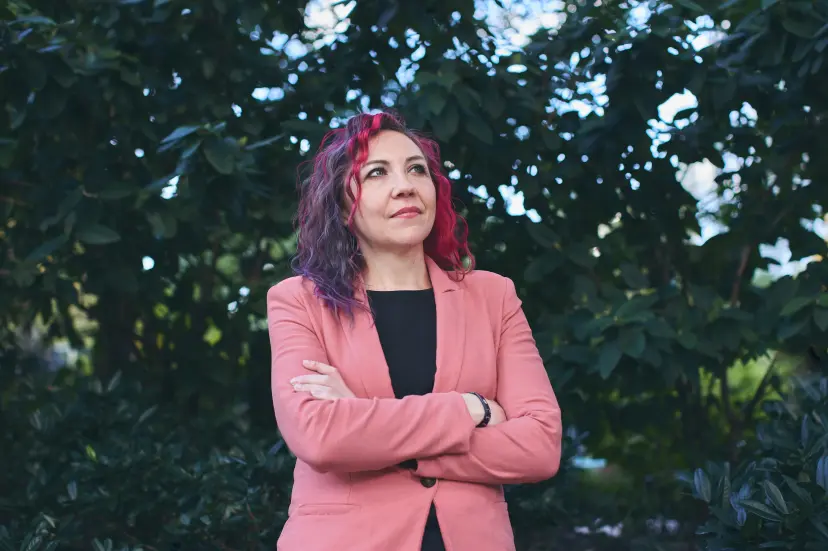
McGuire, a cybersecurity analyst, moved to Marana from California 15 years in the past. She nonetheless misses the near-perfect local weather of the Bay Space and the straightforward entry to the perfect Vietnamese meals within the nation, and her shiny pink hair appears to be like misplaced within the city, the place most individuals are conservative and plenty of are Mormon. However she loves the desert and the life she has constructed there. And now the City Council, she stated, is poised to destroy precisely what drew her to Marana within the first place. Although she had by no means been concerned in native politics, McGuire was one in every of dozens of Marana residents to talk out towards Beale’s proposal at a City Council assembly in December.
“I had my youngsters right here. I’m elevating my youngsters right here,” McGuire stated. “The city has completed an outstanding job of making public areas the place individuals wish to come out of their homes and socialize.” The information heart, she stated, could be an “eyesore,” however her opposition to it isn’t purely aesthetic. McGuire, who labored on Wall Road within the years main as much as the Nice Recession, is fearful that the AI bubble is about to burst. “One factor I discover curious that Beale hasn’t talked about is that they’re a subsidiary of an organization referred to as Blue Owl,” which is at the moment embroiled in a class action lawsuit for securities fraud, McGuire stated. “For what it’s price,” she added, “I make a residing on cloud computing. This AI bubble bursting goes to materially impression my capacity to pay my mortgage, and I must pivot. I don’t need that for all the city of Marana.”
The City Council didn’t heed McGuire’s warnings, nor did they take heed to the opposite individuals who pleaded that they reject Beale’s proposal. Beale’s guarantees had been attractive: $407 million in tax income over the following decade, greater than one-third of which might go on to Marana. An information heart, the city’s leaders claimed, could be in Marana’s finest curiosity. The City Council had in truth passed an ordinance in 2024 proscribing knowledge heart growth. Any facility constructed within the city could be prohibited from utilizing Marana’s water provide for its cooling techniques and must adhere to design and noise necessities. Builders would additionally need to get documentation from the utility supplier with proof that there’s ample electrical energy to energy a knowledge heart. There could be jobs, good ones. Members of varied commerce unions attended the City Council conferences and spoke out in help of the information heart. Beale workers had been current, too, they usually brought indicators that stated “Sure for knowledge facilities” to distribute to supporters. Nobody took them. Apart from Kai, who recused himself from the proceedings, the council unanimously voted to rezone the land.
“I noticed multiple individual be like, ‘I can’t imagine I’m going to need to vote for a liberal with pink hair simply to do away with this silly fucking knowledge heart.’”
Marana residents fought again: They collected round 2,800 signatures on petitions asking for a referendum on the information heart, solely to have the city reject them on a technicality. Residents sued the city, and so did Beale. In the midst of all this, McGuire and three different knowledge heart opponents determined to run for City Council. Their tagline was “Marana for the Individuals.” They held city halls and knocked on a whole lot of doorways. McGuire, whose politics and presentation are out of step with these of most Marana residents, instructed me she targeted on native insurance policies when speaking to voters. “I noticed multiple individual be like, ‘I can’t imagine I’m going to need to vote for a liberal with pink hair simply to do away with this silly fucking knowledge heart,’” McGuire instructed me. Not like the opposite rebel candidates, she gained.
McGuire, now a member of the City Council, nonetheless worries concerning the long-term results a knowledge heart may have on her neighborhood. Past the water and energy use, she famous that the chips that energy knowledge facilities have a shorter shelf life than tech firms’ financials would recommend. In different phrases, the chips themselves will depreciate extra rapidly than their monetary fashions have in mind. Beale declined to touch upon this explicit line of criticism, however Burkart emphasised the tax income the mission will carry to Marana. He additionally famous the mission’s low water footprint. After building is full, the Marana facility will use roughly 6.6 million gallons a yr.
The prices and uncertainties of knowledge heart building are so huge that some main tech firms lack the money, or the need, to pay for them outright. McGuire stated Beale’s two tasks in Arizona would value a mixed $120 billion to construct, cash that may be funded with non-public fairness and debt, a determine Beale rebuts. In keeping with Burkart, the 2 tasks will value a mixed $8.6 billion. Debt financing isn’t uncommon within the tech trade, however the knowledge heart buildout requires a lot capital that even main monetary companies can’t go it alone. Nvidia just lately labored with a consortium of six main monetary companies that included Blackstone, BlackRock, and Goldman Sachs to finance $500 billion for AI compute; this atypical financing push has been described as extra a collection of partnerships and memos of understanding than closed offers. For small cities hoping to trip the AI wave, it’s additionally a dangerous one. Pulitzer Prize-winning historian Liaquat Ahamed has compared the brand new AI economic system to the railroad increase of the late nineteenth century, when a handful of firms, armed with beneficiant authorities contracts, remade the nation in their very own picture and tanked the worldwide economic system within the course of. The appearance of the railroad made Arizona what it’s immediately. It linked the homesteads and ranches scattered all through the desert to worldwide markets, and to the whims and caprices of world capital.
On a blazing Wednesday morning in early August, I stepped out of my air-conditioned automobile and into the Wild West. There was a miner’s cabin and a sheriff’s workplace and an deserted farmhouse, a church, and a saloon the place, I understood, gunfights had damaged out up to now and would sometime escape once more. There was a small, inoperable properly, an opera home and a carpenter’s studio, a dressmaker, a blacksmith, a financial institution. There was a ranch complicated and an “Oriental Cafe” proper subsequent door to the undertaker. Right here was a small civilization, an oasis within the inhospitable desert, surrounded on all sides by mountains. Not fairly a ghost city, however nonetheless devoid of individuals.
After I walked into the foyer of the Pioneer Residing Historical past Museum in north Phoenix, the girl behind the counter requested if I used to be certain I wished to be there. Apart from the phone museum — which I wouldn’t have the ability to peruse anyway, because the feral peacock that lives on the property had gotten in once more, and he was in a foul temper — the entire thing was exterior. Outdoors that day was 105 levels. The volunteer actors who usually populate the little city weren’t there. Too scorching.
Properly earlier than it turned a state, overconsumption of water was encoded into Arizona’s DNA.
A paved sidewalk that actually didn’t exist within the pioneer days led me to the door of a well-appointed Victorian residence constructed within the Eighteen Nineties for a J. Marion Sears and his household. Although the paint’s yellow exterior now cracks beneath the extreme Arizona solar, it was clear the Searses had lived properly. The Sears residence, a placard boasted, was one of many first wood-framed properties to be erected within the metropolis. Lumber was laborious to return by earlier than the railroad’s tracks reached Phoenix in 1887. Earlier than then all items needed to be freighted into the town, usually by groups of mules, and in reality that was how Sears had made a small fortune. A Accomplice veteran, he arrived within the Arizona Territory in 1878 and made a residing as a freighter and cattle rancher. Although they lived within the desert, the Sears household homestead was fruitful: Tidy orchards offered them with apples, pears, apricots, figs, and almonds.
Picture 1 of 4
Scenes from the Pioneer Residing Historical past Museum in Phoenix.
Scenes from the Pioneer Residing Historical past Museum in Phoenix.
Scenes from the Pioneer Residing Historical past Museum in Phoenix.
Scenes from the Pioneer Residing Historical past Museum in Phoenix.
This bounty was common, however, as detailed in Thomas E. Sheridan’s Arizona: A History, it was precarious. The Sears household, like different white settlers, tended to their crops with water sourced from an intricate community of canals, the primary of which was constructed by the Swilling Irrigation and Canal Firm in 1867. Its proprietor, Jack Swilling, was a hardworking, hard-drinking entrepreneur who usually supplemented his whiskey with liquid morphine. He was not, nonetheless, a very gifted engineer, a limitation that in the end didn’t matter a lot, as a result of Swilling neither designed nor constructed the canals that helped white males settle the Salt River Valley. That work had been completed centuries in the past by the Hohokam, a pre-Columbian individuals who tapped into the Salt and Gila rivers to construct a thriving agricultural civilization in the midst of the desert. By the sixteenth century the Hohokam had fallen. Their descendants scattered; their canals sat idle and finally went dry till Swilling thought to revive them.
Arizona’s AI increase isn’t one thing new; quite, it’s extra of the identical, albeit on a grander scale
Swilling’s innovation kicked off a brand new wave of growth in Arizona. Homesteaders flocked to the territory, as did speculators who had been much less desirous about eking a residing out of the land than getting wealthy off what lay beneath it. The earth didn’t yield a lot in the way in which of treasured metals, nevertheless it was wealthy in copper, and it wasn’t lengthy till buyers from San Francisco and New York opened up mines and smelters. Throughout the territory, household farms had been crowded out by capital. The cattle conglomerates got here first, and with them got here alfalfa. Agricultural conglomerates planted wheat and barley and, after some botanical experimentation, tens of 1000’s of citrus timber, till all of it dried up within the nationwide melancholy of 1893, two years right into a drought that drained the canals and the rivers that fed them. After just a few parched years Arizona was bailed out by the federal authorities, which constructed a reservoir so the individuals of the Salt River Valley would by no means once more expertise privation. Theodore Roosevelt christened his namesake dam in 1911 and predicted that, having harnessed the ability of water, the valley would sometime be “one of many richest agricultural areas on this planet.” Properly earlier than it turned a state, overconsumption of water was encoded into Arizona’s DNA.
Propped up by feats of engineering, Arizona’s economic system steadily plugged alongside till the primary World Struggle, when the economic calls for of militarization reworked the desert state into an financial powerhouse. Instantly there was insatiable demand for every thing Arizona produced: citrus and cattle to feed the troops, alfalfa to feed the cattle, cotton for airplane tires, copper for manufacturing. Fortunes grew. “Alfalfa was King,” the Arizona Republican declared in 1917, “Cotton was Queen, and each Dairy Cow was a Princess.” When the battle ended and the Despair tanked the economic system a decade later, all of it went bust once more. It took one other battle to revive the economic system. The primary indication that issues had been turning round got here in 1939, when a brand new battle in Europe despatched metallic costs hovering. Even earlier than america entered World Struggle II in 1941, the federal authorities had began trying to Arizona as a coaching floor for the navy, constructing out flight faculties and Air Drive bases within the desert. Arizona’s industrial economic system is the product of two world wars — and TSMC’s funding within the state is a part of a commerce battle with China, a Twenty first-century arms race the place the top purpose is just not a nuclear bomb however one thing critics say is akin to it. Checked out this fashion, Arizona’s AI increase isn’t one thing new; quite, it’s extra of the identical, albeit on a grander scale.
“It’s loopy to consider the place we was and what we used to do,” Mackay, Phoenix’s former financial developer, instructed me. “You’d disappear out into the desert. I may trip my horse to Indian Bend in Pima all the way in which to the Verde River with out seeing a constructing.” That route now passes three golf programs, a hospital, an indoor water park, an aquarium, and numerous subdivisions and strip malls. The Salt River Valley had a inhabitants of 11,000 in 1890. Fifty years and a number of other irrigation tasks later, simply over 65,000 individuals lived in Phoenix. Final yr, the metropolitan space reported a inhabitants of greater than 5 million. Shockingly, this growth isn’t guilty for Arizona’s perilous lack of water. Inhabitants progress hasn’t led to a rise in Arizona’s water consumption. Not solely does the typical Arizonan eat much less water immediately than within the Nineteen Eighties, however the state’s general water use has additionally dropped by 16 % since then, a decline nearly solely attributable to decreased agricultural demand. However useful resource conservation can solely go up to now when the rivers and aquifers that maintain life within the state are drying up, and locals are understandably livid that they’re being requested to scale back their very own water consumption whereas native officers welcome new water-intensive industries.
The land instantly surrounding the Pioneer Residing Historical past Museum stays largely undeveloped. Right here the previous stays unchanged and lovingly maintained in honor of the rugged pioneers who made the desert bloom. That is Arizona’s historical past. And simply 5 miles south, the place TSMC’s engineers manufacture the chips that allow the AI trade to reshape life as we all know it, lies Arizona’s future.
Source link